
02 Jun 2026
What to demand from your politicians
Westminster MPs
The UK government has now published its Warm Homes Plan, setting out measures to cut energy bills and deliver clean, green energy for warmer homes.
This marks a vital step forward – but unless the government goes further and faster, millions of households will remain trapped in fuel poverty. Until it’s launched, MPs should keep pressuring the government to make the plan as ambitious and fair as possible.
The Warm Homes Plan is welcome, with tougher standards for rental homes and £5 billion to help councils and social landlords install insulation and clean energy like solar panels. But without more investment it will fall far short of what’s needed to protect peoples’ health and end the scandal of families forced to live in cold, damp homes. At least £6 billion a year is needed — the level Labour committed to before taking office.
Read more about what’s included in the Warm Homes plan and what’s missing in our guide to what we’ve achieved through our campaign over the last 3 years.
MPs can continue to champion warm homes by calling for government to do more and take action that goes further and is delivered faster.
Welsh Senedd MSs
The next big influencing opportunity for the Senedd will be in the lead-up to the May 2026 election, when parties and individual candidates can make warm homes central to their election campaigns. Until then, the biggest priority is to unlock more funding from the UK government to fund the existing warm homes programme being delivered by the Welsh Government. Find out more about our warm homes demands in Wales.
Local councils and regional mayors
The UK government’s Warm Homes Plan will set out the role of English local authorities in more detail. Until then, you can assess how well your council is performing on warm homes policies by checking out Climate Emergency UK’s scorecards. These scorecards set out actions councils can take without the need for significant additional funding, such as enforcing Minimum Energy Efficiency Standards for privately rented homes.
The Warm Homes Plan sets out new expectations for English local authorities and regional mayors have to help deliver on national targets. Councils and regional mayors. have a role to play by:
- enforcing Minimum Energy Efficiency Standards for rental properties
- identifying and supporting households most affected by cold homes
- making full use of national and regional funding streams to deliver insulation programmes.
You can check how well your council and mayor are performing using Climate Emergency UK’s scorecards, which highlight practical, low-cost actions councils can take now.
Tactics to engage your politicians
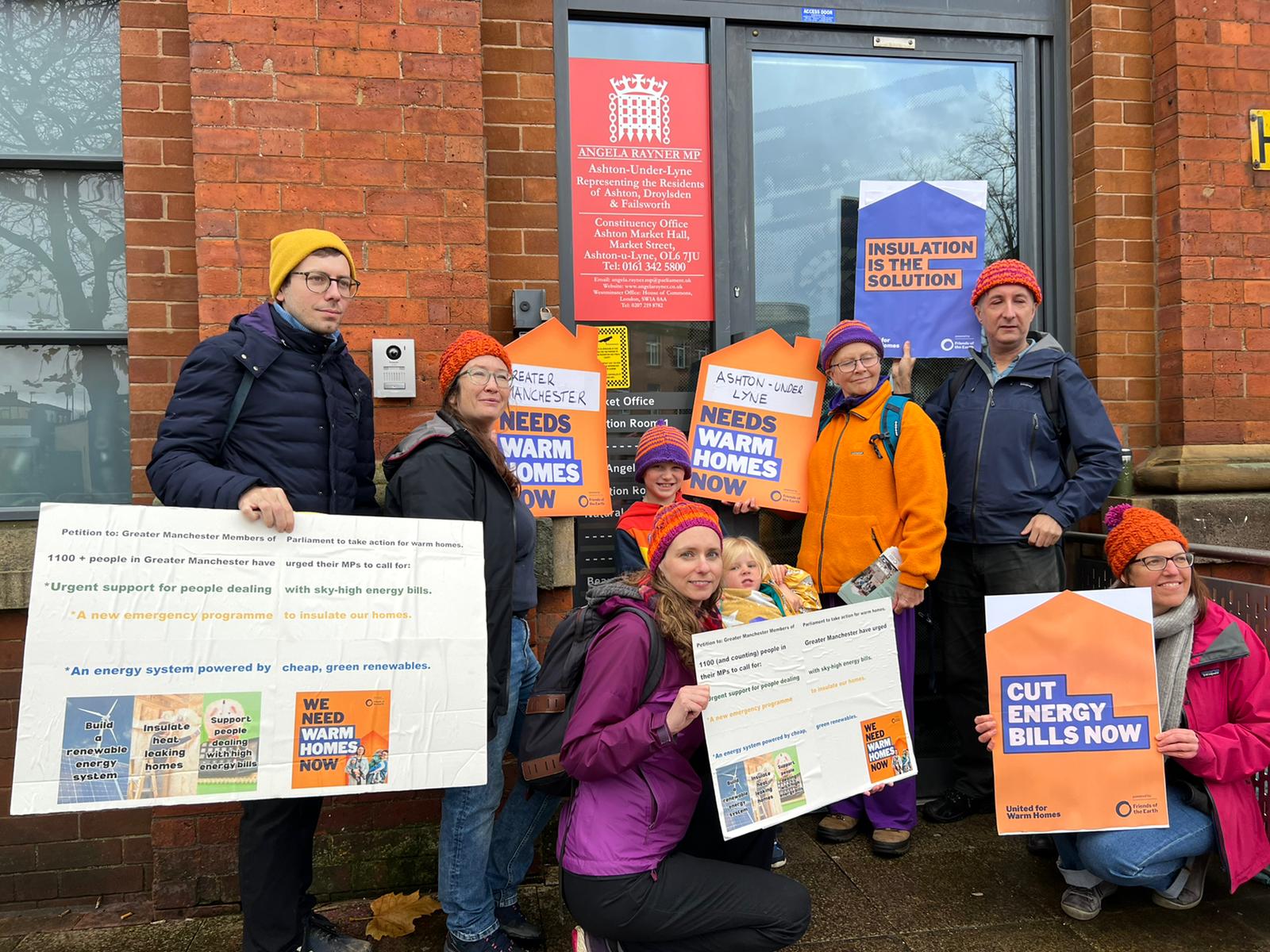
Set up a local petition
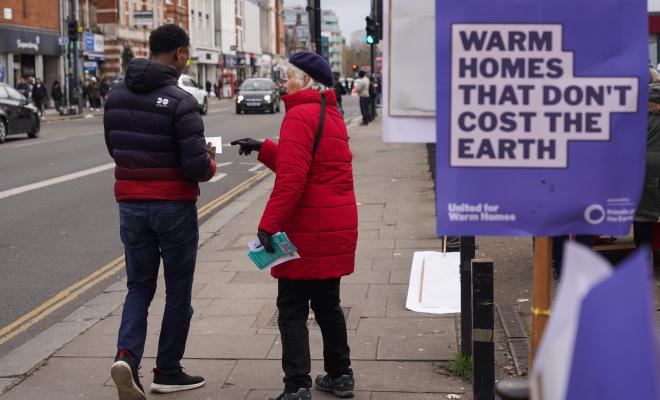
It’s important that our decision makers know the breadth of support for action on warm homes. Collect petition signatures using our Warm Homes postcards (order these online for free) or via the online platform Action Network, and deliver them to your local politicians. Read more about building local support.
Make a scarf
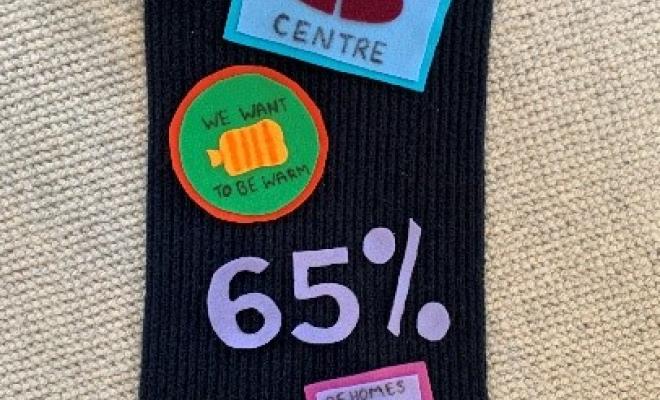
Invite your local politicians to a craftivism session and use it as an opportunity to discuss your campaign demands. Politicians will see this is an attractive photo opportunity too. Find out how to make a Warm Homes scarf.
Share local data
See how your local area is impacted by cold homes by entering your postcode on our Near You tool or by looking at our Warm Homes map.
Talk your politicians through the findings or email them if you can’t secure a meeting. Alongside the facts and figures, try to include stories of real-life experiences from local people.
Share our report
We worked with the Institute of Health Equity to produce a report on the health impacts of living in cold homes. The research found that 9.6 million UK households are living in heat-leaking, badly insulated homes and have incomes below the minimum required for an acceptable standard of living.
Cold homes double the risk of adults developing new mental health conditions and put 1 in 4 children at risk of multiple mental health symptoms. They’re also associated with physical health issues such as heart attacks and respiratory problems.
Download the report and email it to your local politicians.
Use thermal imaging cameras
Contact us to borrow one of our thermal imaging cameras, and organise a walk with your local politicians to demonstrate the need for insulation in your area. Use our Warm Homes map to find energy crisis hotspots near you.
Organise a meeting with your politicians
Ask your politicians for a meeting to discuss your campaign and what actions they can take to ensure no one has to live in a cold home. Read our guide to meeting your MP.
Read our guide on regional mayors and why they are important.
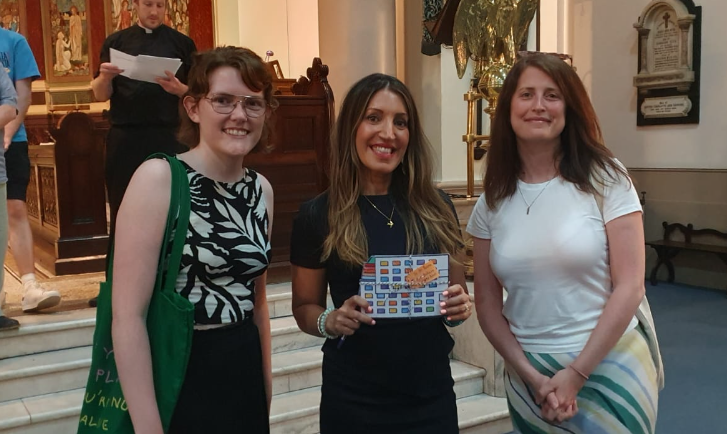
Use social and local media
Whenever you engage your politicians, make sure to share it on your social media channels and tag them to hold them to their commitments. Encourage them to post about the campaign on their own channels too.
Send out a press release to local media explaining how your politician has engaged with the campaign. This will help keep the pressure on them to take action.
Support
If you need any help with engaging your politicians, get in touch with your regional campaign organiser or email [email protected]. We’d also love to know if you meet your politicians so that we can keep track of engagement across the country.
Remember it’s important to remain politically impartial in your campaigning. Read our guidance to find out more.